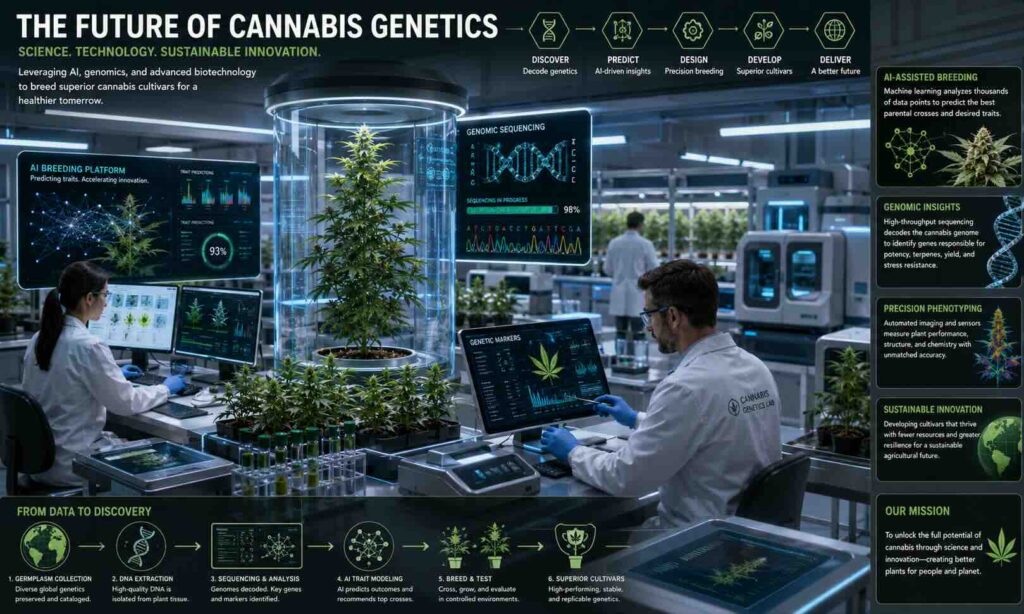
Cannabis genetics have advanced dramatically over the past few decades. What was once a field dominated by regional landraces and a relatively limited number of breeding projects has evolved into a sophisticated discipline focused on stability, consistency, and innovation. Modern breeders now have access to a broader range of genetic resources, cultivation technologies, and analytical tools than ever before. As a result, the future of cannabis genetics promises continued development across both commercial and cultivation-focused sectors.
Breeding innovation remains one of the primary forces driving progress within the cannabis industry. From improved stability and environmental adaptability to specialized cannabinoid profiles, genetics continue shaping the direction of modern cultivation.
The Evolution of Modern Breeding
Early cannabis breeding often relied on observation, selection, and practical experience. While these methods remain important today, modern breeding programs increasingly combine traditional selection techniques with scientific analysis and long-term genetic planning.
This evolution has allowed breeders to refine cultivars with greater precision while preserving desirable traits across multiple generations. The result is a growing number of stable and reliable varieties suited to different cultivation environments and objectives.
Breeding continues to evolve as new technologies become available.
Innovation often builds upon decades of accumulated knowledge and experience.
Stability and Consistency as Priorities
One of the most important goals in contemporary breeding is genetic stability. Growers increasingly seek cultivars that demonstrate predictable performance and consistent characteristics across cultivation cycles.
Stable genetics simplify cultivation planning and help growers better understand how plants will behave under specific environmental conditions. As breeding programs become more advanced, consistency is expected to remain a major focus.
Reliable genetic expression benefits both breeders and cultivators.
Consistency remains a cornerstone of successful cannabis breeding.
Specialized Genetic Profiles
The future of cannabis breeding is likely to involve increasingly specialized genetic profiles. Breeders continue exploring diverse cannabinoid and terpene combinations while seeking unique plant characteristics that distinguish one cultivar from another.
This specialization reflects growing interest in genetic diversity and targeted breeding objectives. As scientific understanding improves, breeders may gain additional opportunities to refine cultivars for specific cultivation goals.
The diversity of available genetics continues expanding each year.
Innovation often emerges through careful exploration of genetic potential.
The Role of Technology in Breeding
Technology is becoming increasingly important within cannabis breeding programs. Data collection, environmental monitoring, and genetic analysis tools allow breeders to evaluate plants with greater accuracy and efficiency.
Growers interested in exploring professionally developed cannabis genetics can learn more through MinistryOfCannabis. Understanding how breeding and cultivation interact helps growers appreciate the importance of long-term genetic development.
Technological advances are expected to continue influencing breeding strategies in the years ahead.
The combination of science and practical cultivation experience creates powerful opportunities for innovation.
Preserving Genetic Diversity
While innovation remains important, preserving genetic diversity is equally valuable. Many breeders recognize the importance of maintaining access to a broad range of genetic resources for future breeding projects.
Genetic diversity provides opportunities for adaptation, experimentation, and long-term resilience. Preserving unique genetics helps ensure that future breeders continue to have access to a rich pool of traits and characteristics.
Additional information regarding cannabis-related developments and public discussion can be explored through https://www.lemonde.fr/cannabis/.
The future of cannabis breeding depends not only on innovation but also on the preservation of valuable genetic resources.
Final Thoughts
The future of cannabis genetics and breeding innovation appears highly promising. Advances in breeding methods, technological tools, and scientific understanding continue expanding the possibilities available to cultivators and breeders alike.
By balancing innovation with genetic preservation, the cannabis industry can continue developing stable, diverse, and high-quality cultivars for future generations. Genetics remain the foundation of cultivation, and their continued evolution will shape the future of cannabis for years to come.